Puppy Crying During Crate Training: What to Do
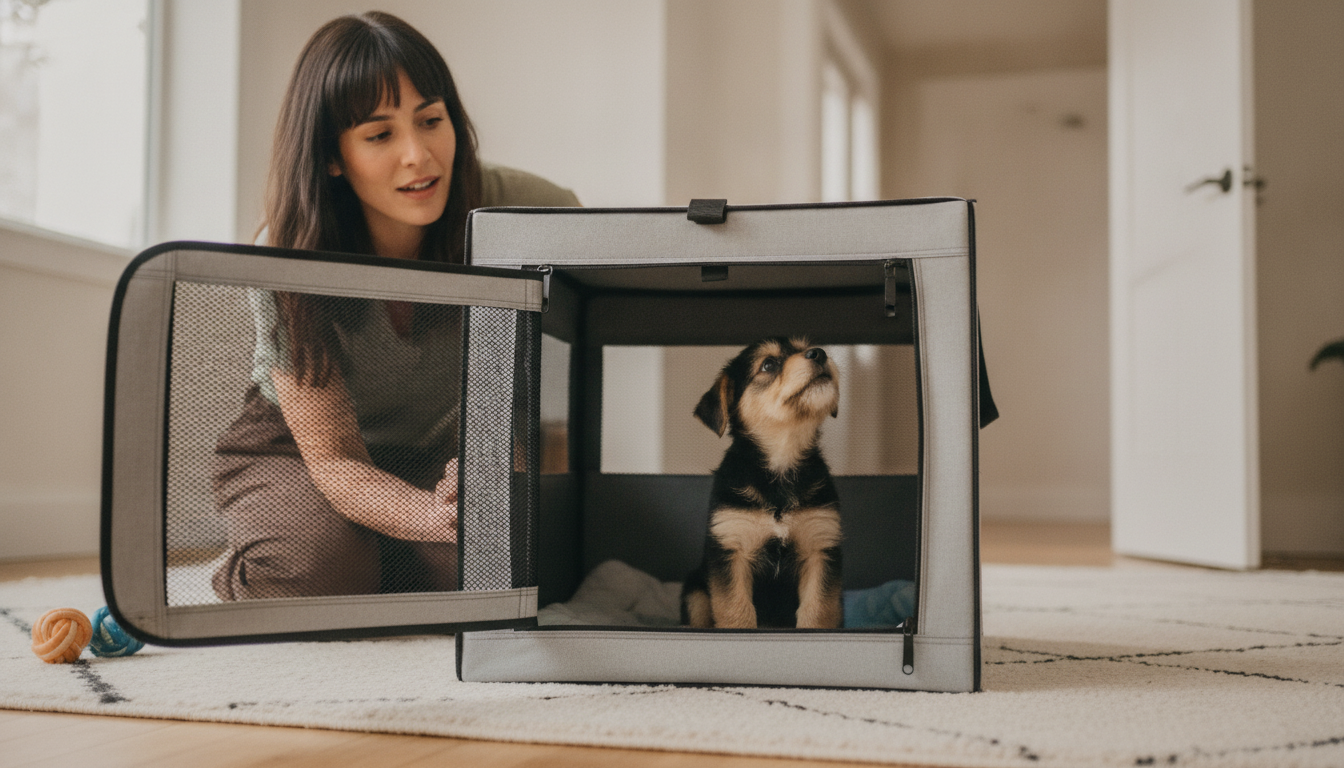
Do I just let my puppy cry while I am crate training her?
No—don’t ignore crying as a rule, but don’t rush to “rescue” your puppy every time either. During crate training, some whining is normal as your puppy adjusts, yet persistent or escalating crying can mean a real need (potty, fear, or stress). The goal is to teach that the crate is safe and predictable, not that crying is the only way to get attention.
What to do when your puppy cries in the crate
First, rule out a real need
If your puppy has been in the crate for a while, assume she may need a quick potty break—especially at night or right after drinking. Keep the trip boring: straight outside, quiet praise for going potty, then back to the crate. Avoid playtime, treats, or lots of cuddling during these breaks so crying doesn’t turn into a strategy.
Pause before responding
If you’re confident she doesn’t need to potty, wait for a brief quiet moment (even 2–3 seconds) before speaking or approaching. That timing matters: responding during active crying can accidentally reward it. A calm “good girl” when she settles can help her learn that quiet brings reassurance.
Make the crate routine easier to accept
Set your puppy up for success by crating her when she’s tired and has recently pottied. Offer a safe chew, keep the environment calm, and use short sessions that gradually build. If she panics (frantic scratching, nonstop screaming, drooling, trying to escape), back up a step and rebuild confidence with shorter, positive crate times.
Keep consistency, not intensity
Crate training works best when the rules don’t change day to day. If you sometimes let her out immediately and other times ignore her completely, crying often increases. Aim for predictable potty breaks, calm check-ins, and gradual progress.
For a deeper step-by-step plan and common troubleshooting scenarios, read the full guide here: Do I just let my puppy cry while I am crate training her?
FAQ
How long should I wait before letting my puppy out of the crate at night?
If she’s actively crying, wait for a brief pause in the noise, then take her out for a quick, boring potty trip. If crying continues nonstop and she hasn’t pottied recently, treat it as a potty need first; otherwise, increase support with shorter sessions and gradual nighttime intervals.












Leave a comment